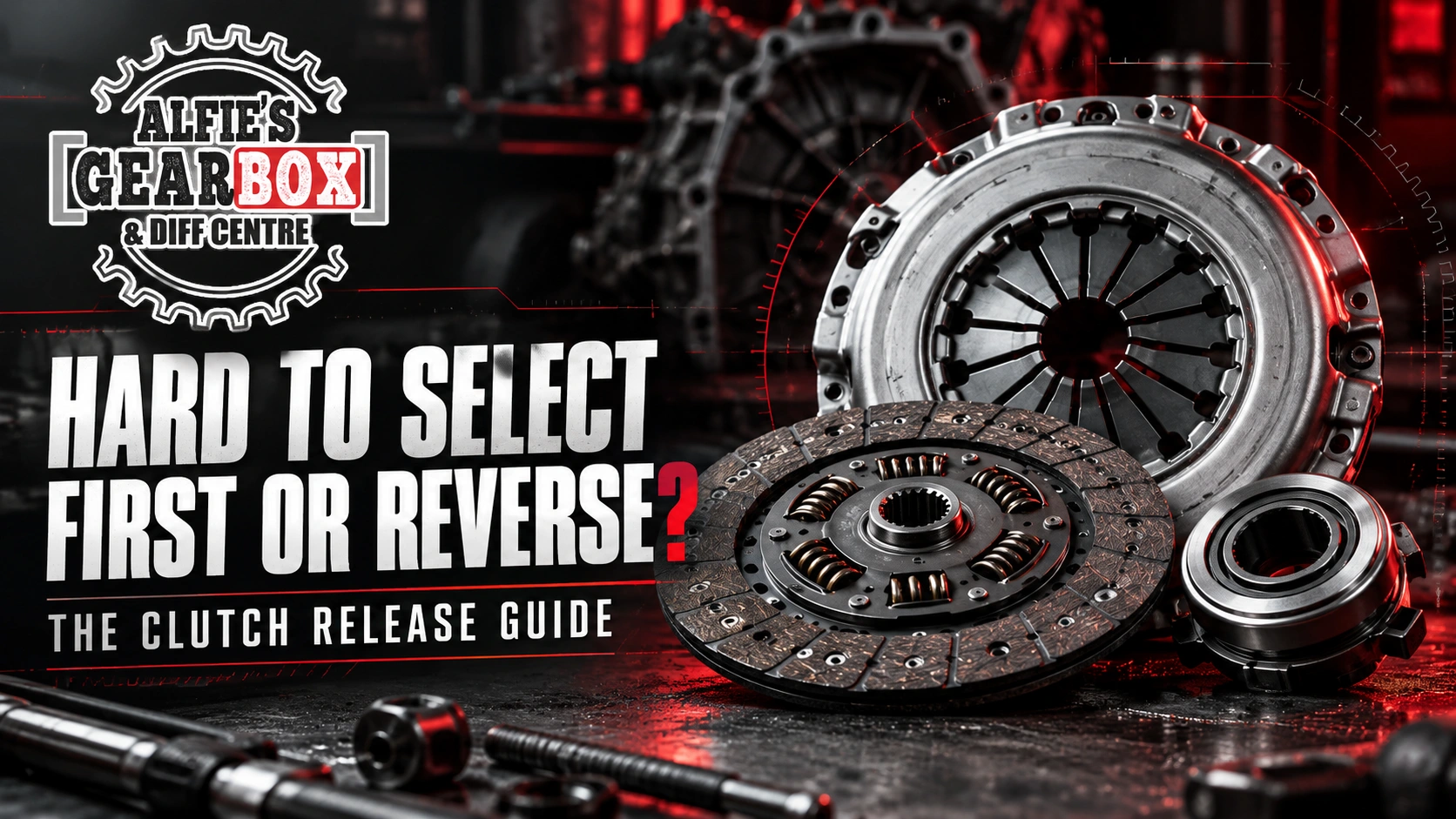
Hard to Select First or Reverse? It May Be a Clutch Release Problem
A reluctant gear change does not automatically mean a failed gearbox. Understand clutch release, useful observations and the questions to ask before approving repairs.
On a manual vehicle, incomplete clutch release can make first or reverse difficult to select. The cause may involve the actuation or release system, the clutch itself or another part of the drivetrain. A workshop assessment should establish the fault before parts are ordered.
You press the clutch pedal, reach for first gear and the lever resists. Reverse may be awkward too. It is tempting to assume the gearbox has failed, particularly when the car still drives once a gear is selected. But the gearbox is only one part of the picture. This guide helps manual-car owners describe the problem clearly and compare the proposed repair scope.
What clutch release actually means
The clutch connects the engine to the transmission when engaged. Pressing the pedal should operate the release mechanism so that the clutch separates sufficiently for the intended gear change. If that separation is incomplete, the gearbox may still be receiving movement when you expect it to be disconnected. Owners often hear this called clutch drag.
A release problem differs from clutch slip. Slip concerns the clutch not transmitting drive effectively when engaged; a release problem concerns the clutch not separating properly when commanded. Similar everyday descriptions can hide different faults, so tell the workshop what the vehicle does rather than naming a replacement part.
Why the pedal and release system matter
Some manual vehicles use a cable; others use hydraulic actuation. The release mechanism and access requirements also vary. The workshop may need to examine actuation, travel, wear, leaks and related components before deciding what work is necessary.
SACHS guidance on incomplete clutch disengagement identifies release-system faults, pilot-bearing problems and installation issues among possible causes. That technical guidance supports checking the system as a whole; it does not diagnose your vehicle or establish which components Alfie’s will replace.
The observations that help an assessment
Think back to ordinary use rather than repeatedly trying to reproduce the fault. Was first difficult at a traffic light? Did reverse resist after parking? Did the pedal feel different, stay low or return unusually slowly? Was there a noise, a leak or recent clutch work?
Mention whether the issue started suddenly or developed gradually, which gears are affected and whether the vehicle was cold or warm. If you already noticed a difference between engine-off and engine-running selection, report it. Do not run further tests in gear or deliberately make the vehicle creep. The workshop can investigate under controlled conditions.
Could it still be a gearbox or linkage problem?
Yes. Difficult gear selection can also involve the selector mechanism, linkage or internal transmission condition. A symptom alone does not establish which system is responsible. A fault affecting one gear may lead to a different investigation from a change that makes several gears difficult.
Ask what findings point towards clutch release, the selector system or the gearbox. For context on a later gearbox decision, read our repair-versus-exchange guide. That decision should follow assessment, rather than being the first purchase made.
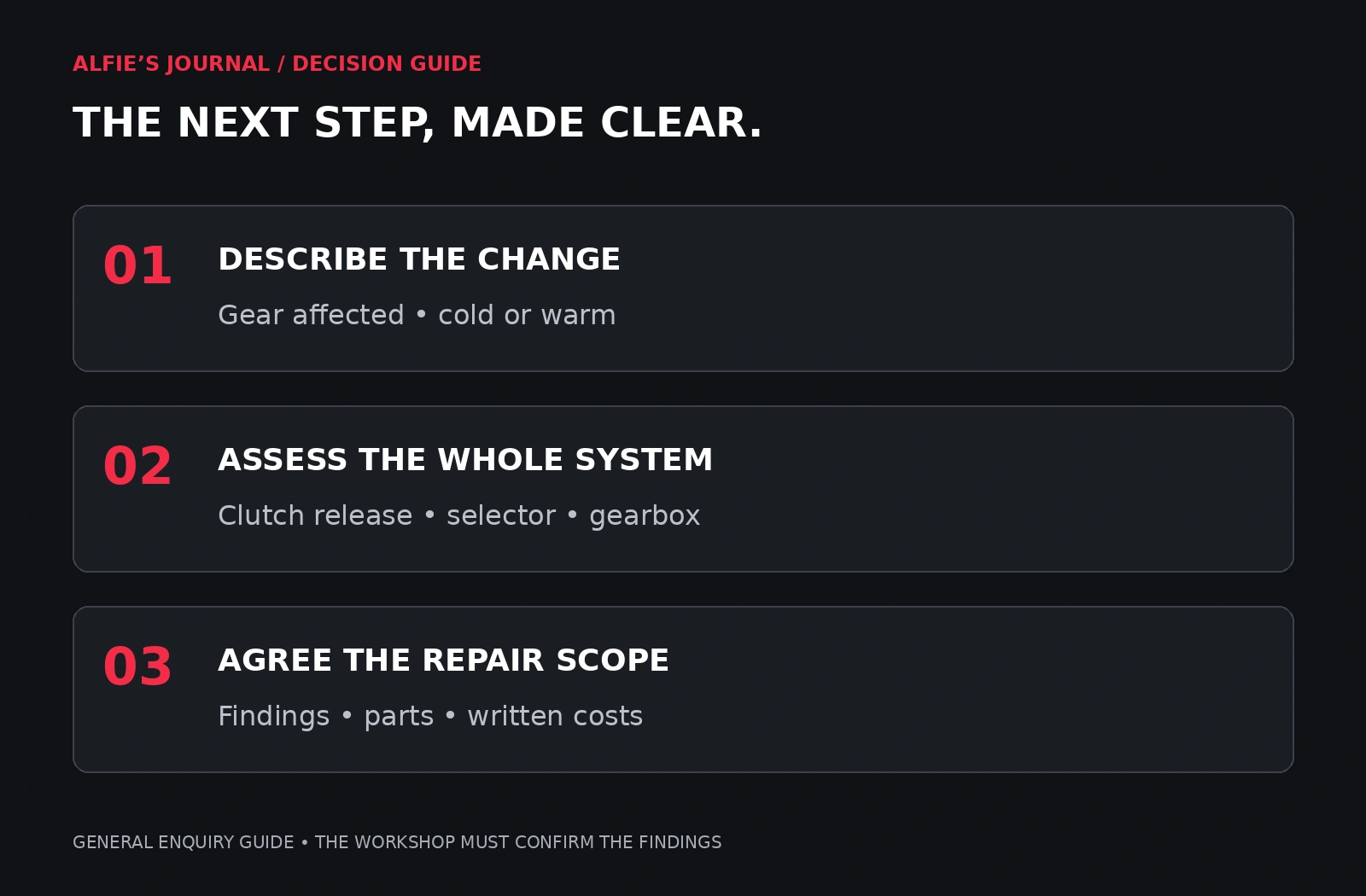
What to clarify in a clutch repair quote
A quote for one release-system component and a quote involving gearbox removal are different jobs. Ask which findings support the recommendation and whether the estimate is provisional until further access or dismantling. Find out what happens if additional wear is found.
Request the agreed scope in writing: parts, labour, fluids where required, related work, VAT treatment and applicable warranty terms. Ask whether the clutch assembly, flywheel or other components need assessment during the work, without assuming they all require replacement. Confirm that you will be contacted before costs exceed the authorised scope.
When driving should stop
If the vehicle cannot select a gear reliably, moves unexpectedly with the clutch depressed or develops a major change in pedal operation, avoid further driving and contact the workshop about recovery. Do not force the lever or rely on repeated attempts as a way to keep using the car.
Recovery arrangements must suit the vehicle. Refer to the manufacturer’s instructions and discuss the situation with the recovery provider. A booking call can establish how to bring the car in and which vehicle details the workshop needs; it cannot replace an inspection.
Prepare your enquiry for Alfie’s in Nigel
Have the make, model, engine details, mileage and recent repair history ready. Describe the gear-selection problem in plain language and include the conditions in which it occurred. If a repair was recently completed elsewhere, bring the invoice or parts information so the history is clear.
Alfie’s lists clutch services alongside gearbox work. Contact the Nigel workshop to confirm service suitability and arrange assessment. The useful first step is a clear description of the problem, followed by a recommendation based on findings.
Frequently asked questions
Does hard reverse selection prove the clutch is worn?
No. It can involve incomplete release or other selection problems. The clutch and associated systems need assessment before a diagnosis is made.
Will replacing the clutch kit fix it?
Only if the proposed work addresses the actual fault. Ask what will be done about actuation or release-system problems if they are found.
Can the workshop quote from my description?
A description can help plan the enquiry, but a firm scope may depend on inspection or further access. Ask what is included in any preliminary estimate.
Let’s discuss your vehicle.
Speak to Alfie’s Gearbox & Diff Centre about the assessment and work your vehicle needs.
078 838 2686 · info@alfiesgearbox.co.za
68 Springs Road, Nigel, 1590
Monday–Friday · 08:00–17:00