
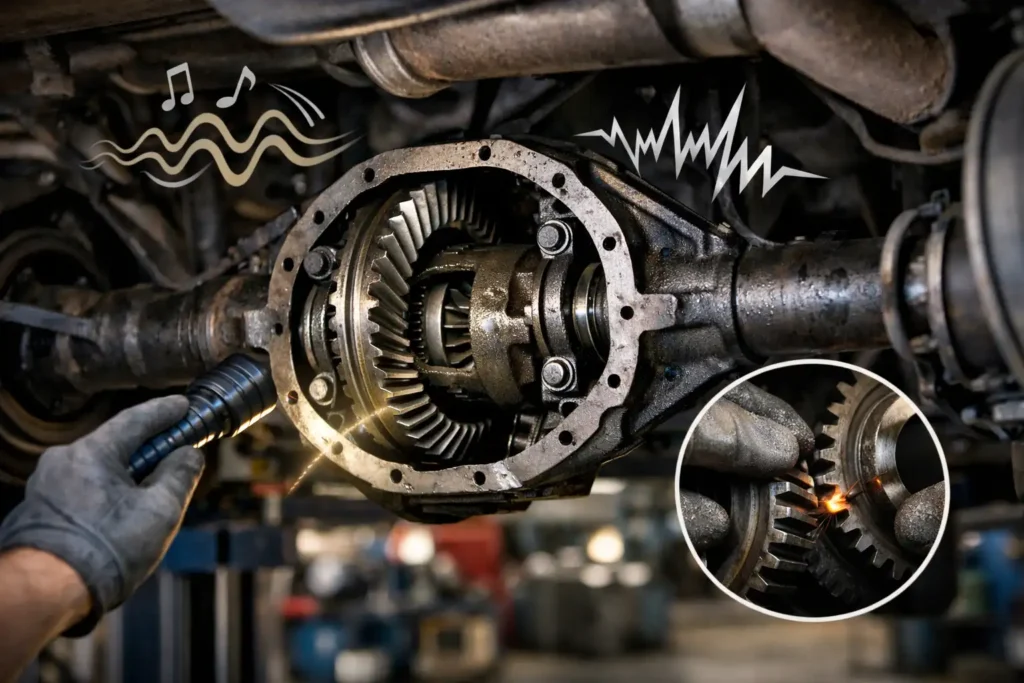
How to Diagnose Differential Noises Before They Become Costly Repairs
Your vehicle’s differential is one of those components most drivers never think about—until something goes wrong. When it does, the warning signs are usually not subtle. A faint whine that gradually gets louder, a deep rumble at certain speeds, or a worrying clicking sound when turning can all point to developing differential problems.
Ignoring these early symptoms can quickly turn a manageable repair into a full differential overhaul or even drivetrain failure.
At Alfies Gearbox & Diff Centre in Nigel, we specialise in differential repairs, gearbox repairs South Africa, and drivetrain diagnostics, helping drivers across Nigel, Springs and surrounding areas catch issues before they become expensive breakdowns.
This guide will help you understand the difference between common differential noises, what causes them, and when it’s time to book a professional inspection.
Understanding What the Differential Actually Does
Before diagnosing noises, it helps to understand the role of the differential.
The differential is part of your vehicle’s drivetrain and sits between the drive wheels. Its job is to:
- Allow wheels to rotate at different speeds during cornering
- Transfer power from the gearbox to the wheels
- Maintain traction and stability
- Reduce tyre scrubbing on turns
Inside the differential are gears, bearings, and oil that must work in perfect harmony. When lubrication drops, components wear, or gears misalign, noise is often the first warning sign.
The Three Most Common Differential Noises
Differential problems usually fall into three distinct sound categories:
- Gear whine
- Low rumbling or humming
- Clicking or clunking noises
Each sound points to different types of mechanical wear or failure.
Let’s break them down.
1. Gear Whine – High-Pitched Warning Signal
A whining noise from the differential is one of the earliest and most common symptoms of trouble.
What it sounds like:
- High-pitched whining or howling
- Increases with vehicle speed
- May change pitch when accelerating or decelerating
- Often more noticeable under load
Common causes:
- Worn ring and pinion gears
- Incorrect gear meshing
- Low or contaminated differential oil
- Improper gear setup after previous repairs
- Bearing wear affecting gear alignment
What it means:
Gear whine usually indicates incorrect gear contact patterns or lubrication issues. If caught early, it may only require adjustment, fresh oil, or bearing replacement.
However, if ignored, the gear surfaces can wear unevenly, leading to complete gearbox overhaul or differential rebuild.
Driver tip:
If the whine gets louder when you accelerate but quieter when you lift off the throttle, the issue is likely gear-related rather than wheel bearings or tyres.
2. Rumbling or Humming – Bearing Failure Warning
A rumbling or humming noise is often mistaken for tyre noise, but it can actually signal serious internal wear inside the differential.
What it sounds like:
- Deep humming or growling sound
- Constant noise that increases with speed
- May be felt as vibration through the floor or seat
- Often changes slightly when turning left or right
Common causes:
- Worn differential bearings
- Damaged carrier bearings
- Insufficient lubrication
- Metal contamination in diff oil
- Excessive drivetrain load (towing or heavy use)
What it means:
Rumbling usually points to bearing failure inside the differential housing. Bearings support the rotating gears, and once they wear out, the entire system becomes unstable.
This type of issue can quickly escalate into:
- Gear misalignment
- Excessive heat buildup
- Metal shavings in oil
- Full differential failure
Driver tip:
If the noise changes when turning left or right, it often helps identify which side’s bearing is worn. However, professional diagnosis is essential to confirm it.
3. Clicking or Clunking – CV or Differential Joint Issues
A clicking or clunking sound, especially when turning, is often linked to drivetrain articulation problems.
What it sounds like:
- Repetitive clicking when turning
- Loud clunk when shifting between drive and reverse
- Noise more noticeable at low speeds
- May feel like a slight jerk in the drivetrain
Common causes:
- Worn CV joints (CV joint repairs required)
- Damaged differential side gears
- Excessive backlash in gears
- Loose or worn drivetrain mounts
- Propshaft or universal joint wear
What it means:
Clicking is often associated with CV joint wear, but it can also indicate internal differential gear damage. In rear-wheel-drive vehicles, it may also involve the propshaft or universal joints.
If the issue is CV-related, replacement is usually required. If it’s internal differential damage, a gearbox specialist inspection is necessary.
Driver tip:
Clicking that gets worse during tight turns (like parking) is a strong indicator of CV joint wear rather than tyre or suspension issues.
Other Subtle Warning Signs You Shouldn’t Ignore
Differential noise is not always obvious at first. Watch for these early symptoms:
- Slight vibration at cruising speed
- Oil leaks near the rear axle
- Burning smell after long drives
- Difficulty maintaining smooth acceleration
- Increased fuel consumption
- Uneven tyre wear
These signs often appear before serious failure.
What Causes Differential Damage?
Understanding the root causes helps prevent repeat repairs.
1. Low or degraded oil
Differentials rely heavily on correct lubrication. Old or leaking oil leads to overheating and metal-on-metal contact.
2. Heavy towing or overloading
Frequent towing places extreme strain on the drivetrain, especially in SUVs and bakkies.
3. Aggressive driving
Hard acceleration, sudden braking, and off-road abuse accelerate gear wear.
4. Poor maintenance
Ignoring scheduled fluid changes is one of the most common causes of failure.
5. Previous incorrect repairs
Incorrect setup of gear backlash or bearing preload leads to early failure.
When You Should Book a Professional Inspection
You should book a differential repair specialist immediately if you notice:
- Noise that increases with speed
- Any rumbling from the rear of the vehicle
- Clicking when turning
- Oil leaks near the differential
- Vibration through the drivetrain
- Sudden changes in handling or noise
At this stage, continued driving can turn a repairable issue into a full replacement.
Repair vs Replacement: What’s the Better Option?
Not all differential problems require full replacement.
Repair may be possible when:
- Bearings are worn but gears are still intact
- Oil contamination is caught early
- Minor adjustment issues exist
Replacement or overhaul is needed when:
- Gears are pitted or damaged
- Severe metal contamination is present
- Housing is damaged
- Complete bearing collapse has occurred
A professional gearbox fault diagnosis is essential to determine the most cost-effective solution.
Preventative Maintenance Tips
To extend the life of your differential:
- Change differential oil at recommended intervals
- Avoid excessive towing loads where possible
- Listen for early noise changes
- Check for oil leaks regularly
- Service drivetrain components together (CV joints, gearbox, propshaft)
- Have vibration issues inspected early
Preventative maintenance is far cheaper than a full differential rebuild or gearbox overhaul.
Why Professional Diagnosis Matters
Differential systems are highly precise. Misdiagnosing the source of a noise can lead to unnecessary repairs and higher costs.
At Alfies Gearbox & Diff Centre, we use hands-on inspection and diagnostic experience to accurately identify:
- Gear wear patterns
- Bearing condition
- Lubrication failure
- Drivetrain alignment issues
- CV joint and propshaft involvement
We don’t guess—we diagnose properly so you only repair what’s actually needed.
Don’t Ignore the Early Warning Signs
Differential noises rarely appear suddenly without warning. A small whine today can become a costly rebuild tomorrow. The key is early detection and professional assessment.
Whether you’re hearing a faint hum, a sharp click, or a persistent whine, it’s always better to investigate early than risk full drivetrain failure.
For expert differential repairs South Africa, gearbox specialists, clutch replacement, CV joint repairs, and drivetrain diagnostics, trust the team at Alfies Gearbox & Diff Centre.
Contact Alfies Gearbox & Diff Centre Today
If your vehicle is showing signs of differential noise or drivetrain issues, don’t wait for it to worsen.
Visit us in Nigel or Springs and surrounding areas for professional inspection and repair services that keep your vehicle safe and reliable.
 Visit us: 68 Springs Road, Nigel, 1590
 Call: 0810085701 / 0788382686 / 0732833272
 www.alfiesgearbox.co.za