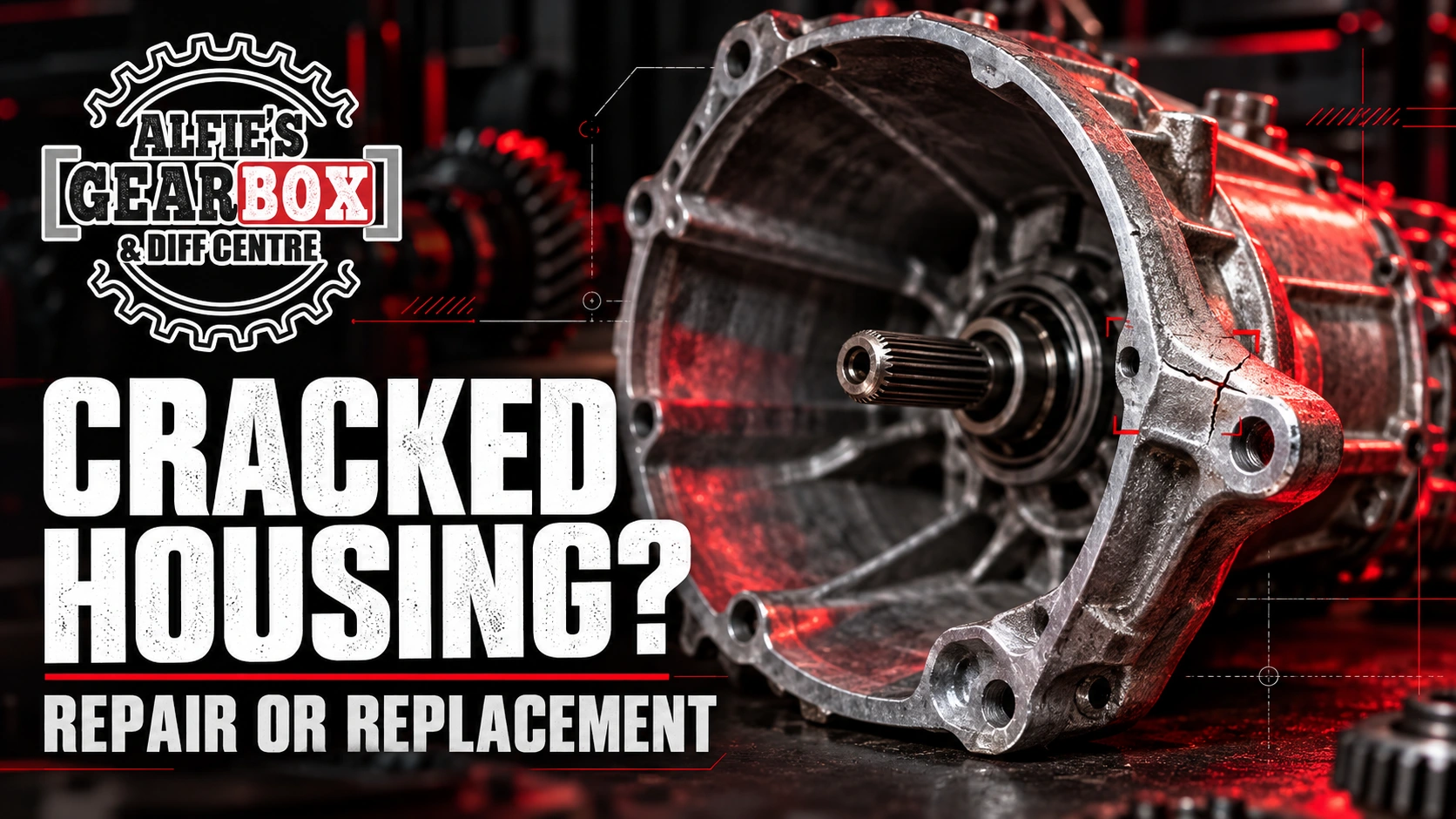
Cracked Aluminium Gearbox Housing: Repair or Replacement?
The position of a crack matters as much as its appearance. Compare repair suitability, precision surfaces, access and the complete cost before deciding.
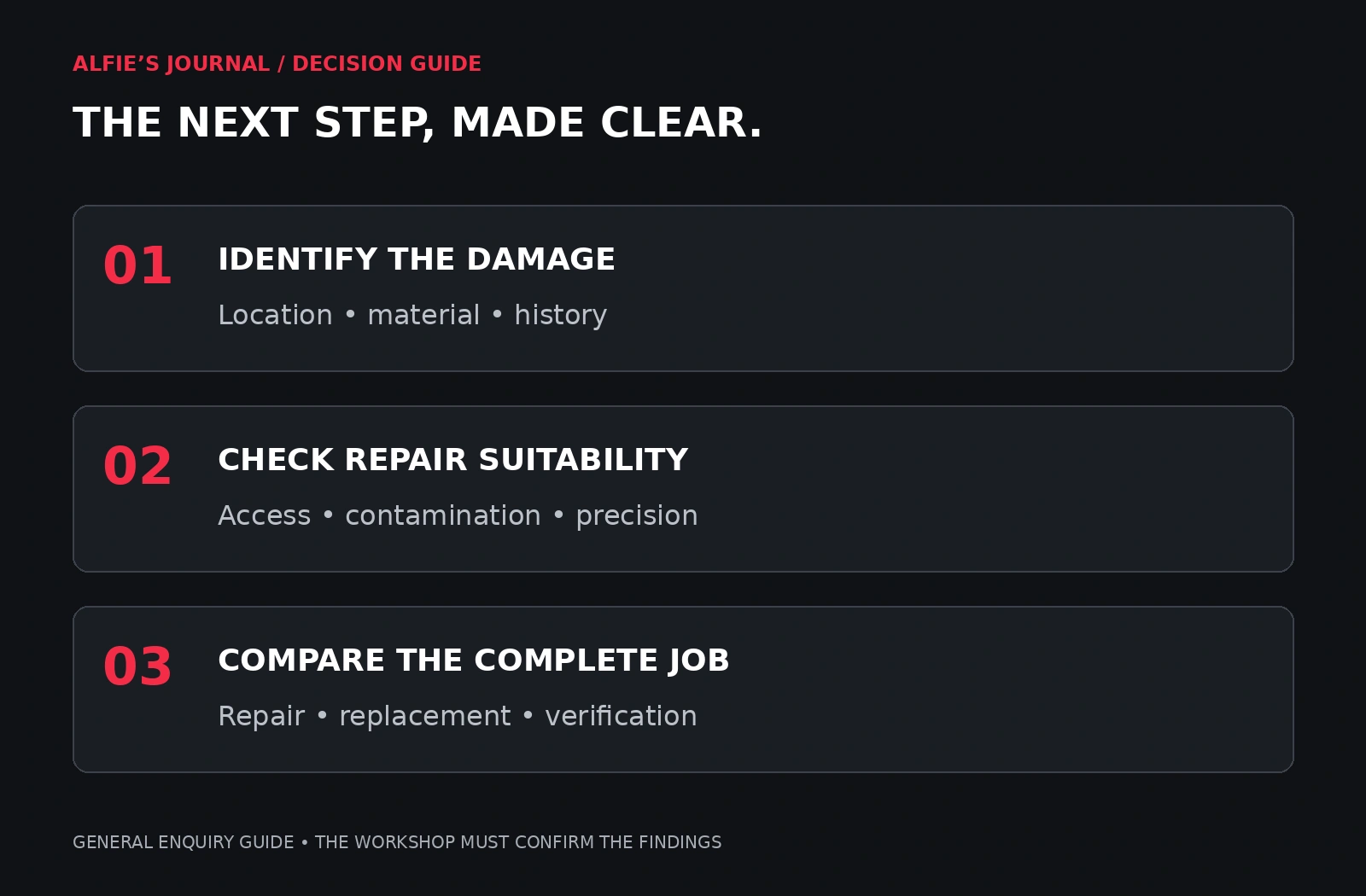
Some aluminium component damage may be suitable for repair, while other damage calls for replacement. For a gearbox housing, crack location, material, contamination, alignment and functional requirements need assessment. A neat-looking weld alone does not establish that a housing is fit for service.
A crack in an aluminium gearbox housing can seem like a simple welding enquiry. The damaged area may be small and the rest of the casing may look sound. But a housing also has mounting, sealing and alignment duties. The decision is therefore about restoring a usable component, not simply covering the visible line.
Start with the housing’s function and the crack’s position
Tell the workshop exactly which component is damaged. A bellhousing, main casing and other aluminium cover are not interchangeable descriptions. Photographs should show the whole component as well as the damaged area, so its location can be understood.
Ask whether the crack is near a mounting lug, threaded hole, sealing face or area that locates another component. These features can make dimensional accuracy important. A small visible crack may require a broader assessment if the surrounding area was distorted or impacted.
Why aluminium repair needs more than a close-up
The material, damage extent and previous history influence whether a repair can be attempted sensibly. A silver appearance does not identify the alloy or establish weldability. Provide casting numbers or component identification where available, and disclose earlier welds or attempted repairs.
Miller’s aluminium repair guidance highlights preparation, cleanliness, filler selection and heat control. It also distinguishes limited repairable damage from severe structural damage. These general principles do not establish the suitability of a particular gearbox housing.
Oil contamination and access can change the job
A component that has held oil may require more preparation than a clean sample part. The workshop must consider how to access the damaged area and prepare it appropriately. Internal parts, wiring and nearby components also need consideration when heat is involved.
Ask whether the housing must be removed or dismantled and who is responsible for that work. Do not arrive expecting an on-vehicle repair simply because the crack is visible from outside. Access and surrounding components can affect feasibility, labour and downtime.
When a repair is worth evaluating
A repair may be worth discussing where the damage is localised and the component can be prepared and restored to its required function. That assessment needs to include any important faces, holes or mounting relationships around the damaged area.
Ask what work follows welding: for example, whether dimensional checks, finishing or other verification are required for that component. The workshop must confirm the appropriate scope. Do not assume that welding alone is a finished gearbox repair, or that all necessary machining is available within one quoted service.
When replacement deserves a closer comparison
Extensive cracking, distorted features, repeated failure or uncertain repair suitability may make replacement the more sensible option to compare. Replacement availability and correct identification still need checking. A used housing should not be accepted solely because it looks similar.
Ask which part or transmission identifiers establish compatibility and what is known about the replacement’s condition. Include removal, transfer of internal components where relevant, reassembly and required checks in the comparison. If wider gearbox damage is present, the housing decision may be only one part of the repair.
Look for the cause, not only the visible crack
Tell the workshop whether the damage followed an impact, previous repair, installation work or a recurring problem. A repaired area that cracks again deserves investigation of the circumstances. The original cause may affect how the component should be restored or whether it should be reused.
Avoid assigning blame from a photograph. Ask what can be established from inspection, what remains uncertain and which associated areas need attention. A recommendation is more useful when it explains the component’s condition and the purpose of the proposed work.
Compare the complete repair and replacement costs
Request a written breakdown covering assessment, preparation, component removal where required, repair or replacement, finishing and reassembly responsibilities. Confirm transport arrangements, VAT treatment, expected downtime and applicable terms. Ask how additional findings will be communicated before extra work begins.
A welding-only price and an installed replacement price cover different work. Compare the expected total for a usable result. If an exchange gearbox becomes an option, our gearbox repair and exchange guide explains the questions to ask about scope, compatibility and written conditions.
Send a useful aluminium welding enquiry
Supply the vehicle make, model, engine and gearbox information, or the loose component’s identification. Include a wide photograph, a clear detail photograph and a description of the damage and history. Ask before cleaning aggressively, grinding or altering the damaged area, because the workshop may need to assess it first.
Alfie’s lists aluminium welding among its services. Contact the Nigel workshop to confirm whether it can assess your particular component and how it should be submitted. If a crack is associated with fluid loss or unreliable vehicle operation, avoid further driving and discuss recovery.
Frequently asked questions
Can every cracked aluminium housing be welded?
No. Material, damage, access and functional requirements influence suitability. The component needs assessment before repair is agreed.
Does a tidy weld prove the repair is sound?
Appearance alone does not establish suitability. Ask which checks are required for the housing’s actual function.
Should I bring the vehicle or just the housing?
Call first. The workshop should confirm access, removal responsibilities and what is needed for the assessment.
Let’s discuss your vehicle.
Speak to Alfie’s Gearbox & Diff Centre about the assessment and work your vehicle needs.
078 838 2686 · info@alfiesgearbox.co.za
68 Springs Road, Nigel, 1590
Monday–Friday · 08:00–17:00