
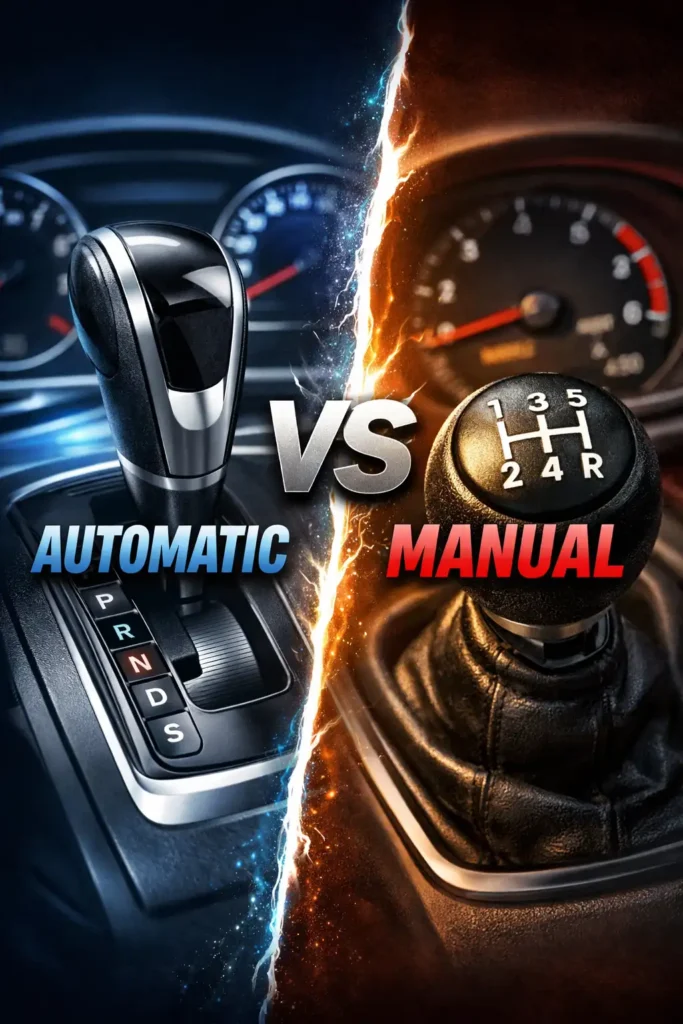
When buying a vehicle, one of the biggest decisions drivers face is choosing between an automatic or manual gearbox. Both options have their advantages and drawbacks, and the best choice often depends on your driving style, daily routine, and maintenance expectations.
Understanding how each system works — and what it means for your driving experience — can help you make the right decision.
What Is a Manual Gearbox?
A manual gearbox requires the driver to manually change gears using a gear lever and clutch pedal. The driver controls when the vehicle shifts gears, which directly affects speed and engine performance.
Pros of a Manual Gearbox
✔ Better control over the vehicle – Ideal for drivers who enjoy a more engaged driving experience.
✔ Lower purchase price – Manual vehicles are often cheaper than automatic models.
✔ Better fuel efficiency (in some cases) – Especially in older vehicle models.
✔ Lower maintenance costs – Manual gearboxes are generally simpler in design.
Cons of a Manual Gearbox
✖ More effort required – Constant gear shifting can be tiring in heavy traffic.
✖ Learning curve – New drivers may find clutch control difficult at first.
✖ Less convenient in stop-and-go traffic
What Is an Automatic Gearbox?
An automatic gearbox changes gears automatically based on speed and engine load. The driver simply selects Drive, Reverse, or Park, and the system does the rest.
Pros of an Automatic Gearbox
✔ Easier to drive – No clutch or manual gear shifting required.
✔ Perfect for city driving – Especially useful in heavy traffic.
✔ Smoother driving experience – Modern automatics shift gears seamlessly.
✔ Less driver fatigue – Ideal for long commutes.
Cons of an Automatic Gearbox
✖ Higher purchase price – Automatics are usually more expensive.
✖ Potentially higher repair costs – Automatic gearboxes are more complex.
✖ Slightly higher fuel consumption in some vehicles.
Maintenance Expectations
Regardless of which gearbox you choose, proper maintenance is essential for longevity and performance.
Manual Gearbox Maintenance
Clutch wear and replacement – Clutches can wear out depending on driving habits.
Gearbox oil changes – Important to maintain smooth gear operation.
Linkage and gear selector maintenance
Manual gearboxes generally require less frequent but still essential servicing.
Automatic Gearbox Maintenance
Automatic transmission fluid (ATF) changes
Filter replacements
Software diagnostics in modern vehicles
Automatic gearboxes require specialized servicing, but when properly maintained they can last just as long as manual systems.
Which Gearbox Is Right for You?
Your ideal gearbox depends on how and where you drive.
Manual may be best if you:
Enjoy full control over your vehicle
Want a more engaging driving experience
Prefer lower maintenance costs
Automatic may be best if you:
Drive daily in traffic
Want a simpler driving experience
Prefer comfort and convenience
Final Thoughts
Both automatic and manual gearboxes have their place on the road. The best choice ultimately depends on your comfort level, driving environment, and budget.
If you’re unsure which option suits your needs — or if your gearbox needs professional attention — it’s always best to consult experienced technicians who understand the mechanics behind both systems.
Regular servicing and early diagnosis can extend the life of your gearbox and prevent costly repairs down the line.
 Visit us: 68 Springs Road, Nigel, 1590
 Call: 081 008 5701 / 064 902 3410
 www.alfiesgearbox.co.za